
Brooklyn service path
A good visit starts before anyone arrives.
Brooklyn work can involve tight access, older construction, roof or window limitations, and the need to plan electrical and AC work together before installation day.
That is why the request should identify whether the problem is comfort, power, water damage, odor, humidity, or a commercial operating need. The right starting point saves time and helps avoid a visit where the wrong tools or parts arrive.
A cold room, a tripping breaker, a damp smell, or a stained floor can point to a larger system issue. The service path should confirm the source, not only cover it up.
Services requested in Brooklyn
- AC installation, mini split systems, ducted central air, repair, cleaning, replacement, and seasonal service.
- Electrical panel review, breaker replacement, dedicated 220V+ AC lines, outlet repair or installation, lighting, EV charger circuits, and commercial electrical work.
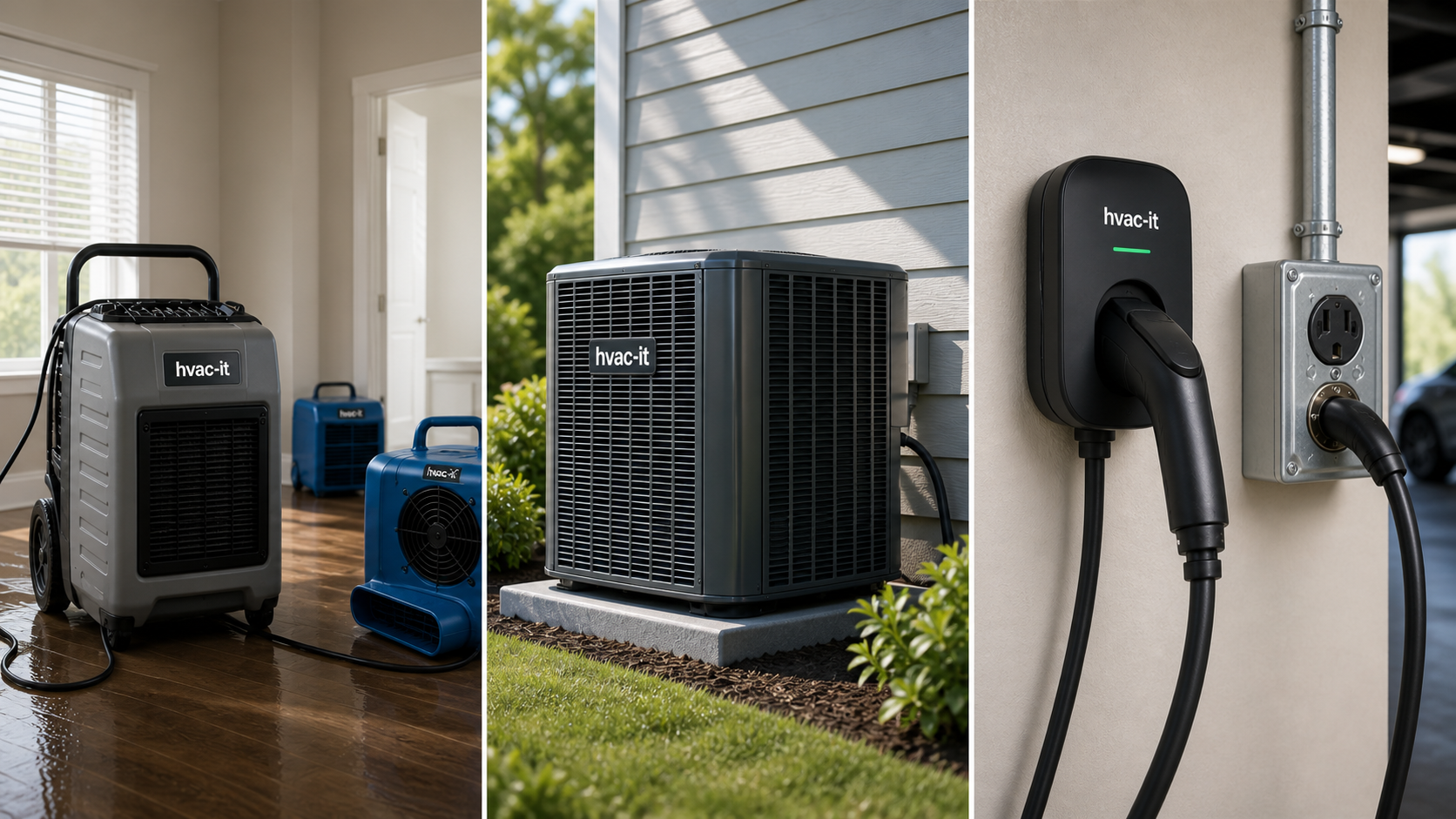
- Moisture inspection, water damage restoration, drying, odor source checks, indoor air quality support, and professional dehumidifier setup or rental options.
Rowhouses, brownstones, and buildings without duct space
Most of the Brooklyn work we quote happens in buildings that were never designed for central air: brick rowhouses in Bay Ridge and Bensonhurst, brownstones in the older neighborhoods, and mixed-use buildings with a storefront below and apartments above. There is rarely room for new ductwork, so the realistic conversation is usually about mini splits — where the condenser can legally and physically sit, how the line set runs down the facade or the rear wall, and whether a rear yard, roof, or side alley placement makes more sense for the block.
Cellars and semi-finished basements in century-old rowhouses are the other constant. Brick foundations wick moisture, summer humidity settles at the lowest level, and a “musty tenant complaint” is often a measurable moisture source that a properly sized dehumidifier or drying plan can fix. Our Brooklyn brownstone mini split vs central story walks through a typical decision like this.
What Brooklyn owners usually ask us for
- Mini split planning for rowhouses and brownstones, including multi-zone layouts for parlor-floor-plus-upstairs living.
- Electrical prep for cooling: dedicated circuits, panel capacity checks in prewar buildings, and replacing tired fuse boxes and crowded subpanels.
- Cellar and basement moisture inspection, drying after leaks, and odor source checks in rental units.
- Storefront and small commercial work — cooling for a shop floor, humidity control for storage in back.
Getting to Brooklyn from our base
We cross the Verrazzano, so Bay Ridge, Dyker Heights, and Bensonhurst are typically 20–30 minutes from our Staten Island base, with the rest of the borough usually inside 45 minutes depending on the BQE. That makes Brooklyn one of our most regular routes, and it is easy to combine a morning estimate with an afternoon install visit.
For landlords and property managers, we can document moisture findings with photos and readings so the file shows the source was identified, not just deodorized. And if you are still weighing system types for a rowhouse, the mini split vs ducted guide and our mini split equipment catalog are the two best starting points before requesting an estimate.
How scheduling works
Send the address, contact number, service type, urgency, and notes. Photos or video are optional but helpful when the issue is visible, access is tight, or water damage is involved. Final availability is confirmed by phone.